How to Clean a Smelly Bathroom Sink Drain: Easy Guide
Is the unpleasant odor from your bathroom sink drain making your daily routine unbearable? You’re not alone.
Many homeowners face this common issue, and it can be both embarrassing and frustrating. But don’t worry; you don’t have to live with that stink forever. With a few simple steps, you can transform your bathroom from a smelly nuisance into a fresh and inviting space.
Imagine waking up each morning to a clean and pleasant environment, free from that pesky odor. Are you ready to learn how to achieve this? Read on, and you’ll discover effective, easy-to-follow methods to clean your smelly bathroom sink drain, leaving you with a bathroom that smells as good as it looks.
Causes Of Smelly Sink Drains
Food particles, soap scum, and hair can build up in bathroom sink drains. These materials create unpleasant odors. Regular cleaning helps eliminate these smells and keeps your sink fresh.
Is there a persistent unpleasant smell wafting from your bathroom sink? Before diving into cleaning solutions, it’s crucial to understand the root causes of this common household issue. Knowing what causes a smelly sink drain can help you address the problem more effectively and prevent it from recurring. Let’s explore some of the usual suspects behind these odors.
Hair And Soap Scum Build-up
Hair and soap scum can combine to create a stubborn blockage in your drain. Over time, this mixture can trap other debris, leading to a foul smell. Regularly clearing out hair and using a drain cover can help minimize this issue.
Organic Material And Bacteria
Food particles, dead skin cells, and other organic materials can end up in your bathroom sink. These materials decompose and become a breeding ground for bacteria. The bacteria produce gases that are the source of those unpleasant odors.
Mold And Mildew Growth
If your bathroom has high humidity levels, mold and mildew can easily grow in your sink drain. This growth can produce a musty smell that permeates your bathroom. Keeping your bathroom well-ventilated can help prevent mold and mildew.
Sewer Gas Backflow
Occasionally, the smell might not come from the drain itself but from sewer gases. If the P-trap under your sink dries out, it can allow these gases to enter your home. Running water down the drain regularly can keep the P-trap filled and block sewer gases.
Improper Venting
A poorly vented drain can cause water to flow inefficiently, leading to stagnation and odors. A plumbing professional can help assess and correct venting issues. Proper venting is crucial for the long-term health of your plumbing system. Understanding these common causes can empower you to tackle the issue with confidence. Have you ever thought about what might be lurking in your drain? Addressing these causes can lead to a fresher, more pleasant bathroom environment.
Essential Cleaning Supplies
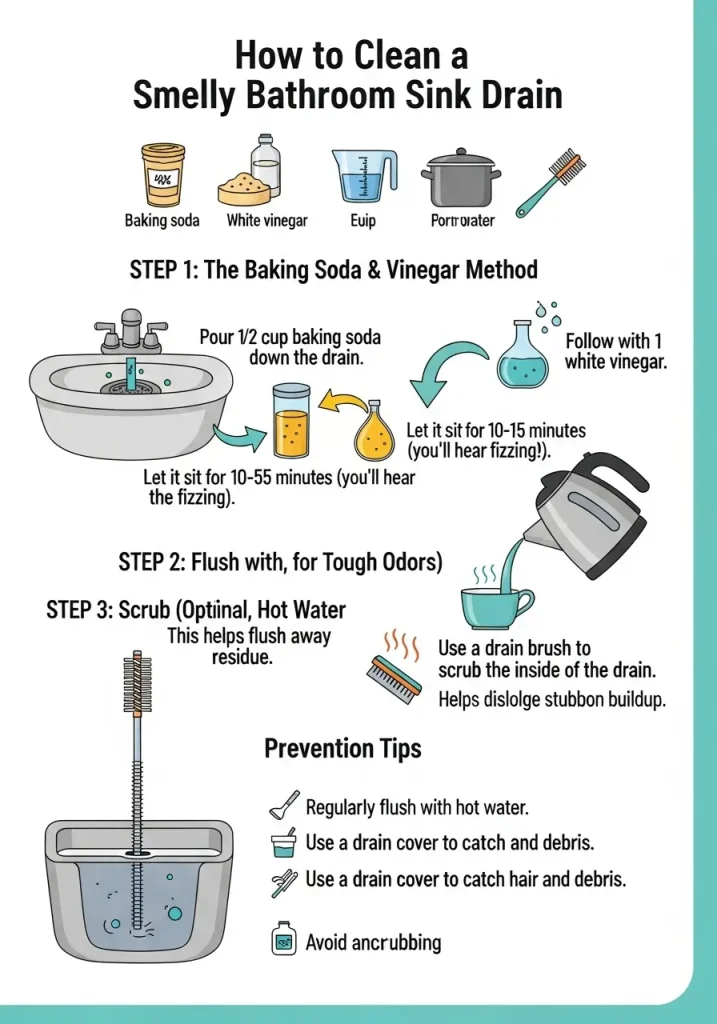
Keep your bathroom sink drain fresh with essential cleaning supplies. Baking soda and vinegar dissolve grime effectively. A small brush can reach deep into pipes to remove buildup and odors. Regular maintenance keeps your sink smelling pleasant and prevents future clogs.
A smelly bathroom sink drain can be a real nuisance, disrupting the overall freshness of your home. Tackling this issue effectively requires the right cleaning supplies. Whether you are a seasoned DIYer or just looking to freshen up your space, having a well-stocked cleaning kit is essential. Let’s dive into the necessary items you should have on hand to eliminate those unwanted odors.
Baking Soda And Vinegar
These two household staples form a powerful cleaning duo. Baking soda acts as a gentle abrasive, helping to scrub away gunk. Vinegar, with its acidic nature, breaks down grime and eliminates odors. Together, they create a fizzing action that can dislodge debris in your drain. Have you ever watched a volcano science experiment? That’s the same reaction that will help clean your sink!
Rubber Gloves
Protecting your hands is vital. Rubber gloves shield you from harsh chemicals and the muck lurking in your drain. They also provide a better grip on slippery surfaces. Feeling squeamish about what you might find? Gloves offer a layer of comfort and courage.
Plunger
A plunger is not just for toilets. It can be instrumental in dislodging clogs in your sink drain. A few firm plunges can free up trapped debris, improving water flow. Do you have a sink plunger at home? It’s a small investment that can save you from a bigger plumbing bill.
Drain Snake
For stubborn clogs, a drain snake can reach where your hands can’t. This flexible tool can navigate the bends of pipes to pull out hair and other blockages. Ever wonder what’s causing those recurring odors? A drain snake might just help you find out.
Hot Water
Sometimes, the simplest solutions are the most effective. Pouring hot water down your drain can help dissolve soap scum and flush away loosened debris. It’s an easy step that complements other cleaning efforts. Have you tried this quick fix yet?
Old Toothbrush
An old toothbrush is perfect for scrubbing around the drain area. Its bristles can reach into crevices that larger brushes miss. Next time you replace your toothbrush, consider keeping the old one for cleaning tasks. It’s a small tool with big cleaning power.
Essential Oils
Adding a few drops of essential oils like tea tree or eucalyptus can leave your drain smelling fresh. They also have natural antibacterial properties. Are you looking for a fragrant finish to your cleaning routine? Essential oils offer a pleasant and aromatic touch. Equipped with these supplies, you’re ready to tackle any smelly bathroom sink drain. Each item plays a unique role in ensuring your bathroom remains fresh and inviting. Ready to roll up your sleeves and get started? Your clean, odor-free sink awaits!
Natural Cleaning Solutions
Dealing with a smelly bathroom sink drain can be frustrating. Natural cleaning solutions offer a safe and effective way to tackle this issue. They are easy to find in your kitchen and are environmentally friendly. Let’s explore some simple methods.
Baking Soda And Vinegar Method
This classic combo works wonders on odors. First, pour half a cup of baking soda down the drain. Let it sit for a few minutes. Next, pour one cup of vinegar over the baking soda. You’ll see it fizz. This reaction helps break down grime. Wait for 15 minutes. Finally, flush the drain with hot water. This helps clear the loosened debris.
Lemon Juice And Salt Mixture
Lemon juice and salt create a powerful cleaning paste. Start by mixing half a cup of lemon juice with a quarter cup of salt. Stir until it forms a paste. Apply the mixture to the drain. Use a brush to scrub gently. The lemon deodorizes, while salt scrubs away dirt. Allow it to sit for 10 minutes. Rinse with hot water to finish the job.
Chemical Cleaning Options
Unclog a smelly bathroom sink drain using baking soda and vinegar. Pour baking soda, then vinegar, into the drain. Wait for the fizzing to stop, then flush with hot water.
Cleaning a smelly bathroom sink drain can sometimes require more than just elbow grease. Chemical cleaning options offer a powerful solution to tackle stubborn odors and blockages. While they can be effective, it’s important to understand how to use them safely and efficiently.
Using Commercial Drain Cleaners
Commercial drain cleaners are readily available and designed to dissolve clogs and neutralize odors. They often contain strong chemicals like sodium hydroxide or sulfuric acid. These substances break down organic materials causing the smell. To use a commercial drain cleaner, follow the instructions on the label carefully. Typically, you’ll pour a specified amount directly into the drain, wait for a set period, and then flush with water. Remember that more is not always better—excessive use can damage your pipes.
Safety Precautions
Handling chemical cleaners requires caution. Always wear protective gloves and eyewear to prevent skin and eye irritation. Ensure the room is well-ventilated to avoid inhaling harmful fumes. Have you ever accidentally splashed a cleaner on your skin? It can be a painful reminder of why safety gear is essential. Keep these products away from children and pets. Store them in a cool, dry place, away from food and other household items. Using them responsibly safeguards both your home and your health. Could a simple oversight in safety lead to bigger issues? Absolutely, so it’s worth the extra effort to protect yourself and your loved ones.
Step-by-step Cleaning Process
Eliminate unpleasant odors from your bathroom sink drain with a simple cleaning routine. First, pour boiling water down the drain to loosen debris. Then, mix baking soda and vinegar, and pour it in to dissolve grime. Finish by flushing with hot water to clear residues and refresh the drain.
Cleaning a smelly bathroom sink drain might seem daunting, but with a well-structured approach, you can tackle this pesky problem efficiently. A fresh and odor-free sink drain not only enhances the overall ambiance of your bathroom but also prevents unpleasant surprises in the future. Let’s dive into a straightforward step-by-step cleaning process that will leave your sink smelling fresh and clean.
Initial Rinse And Drain Preparation
Start by running hot water down the drain for about a minute. This helps to loosen any grime and debris stuck in the pipes. Once done, remove the drain stopper if possible. Use a small brush or an old toothbrush to scrub around the drain opening, reaching as far inside as you can.
Applying Cleaning Solutions
Mix equal parts of baking soda and vinegar. Pour the baking soda into the drain first, followed by the vinegar. You’ll notice a fizzy reaction—this is normal and helps break down the buildup inside the pipes. Let this mixture sit for at least 15 minutes. For an extra boost, you can add a few drops of essential oil to the vinegar before pouring it down the drain. This not only enhances the cleaning effect but also leaves a pleasant scent.
Flush And Final Rinse
After the waiting period, flush the drain with boiling water. This will help wash away the residue and any remaining odor-causing elements. Run cold water for a minute to ensure all cleaning agents are completely rinsed out. You wouldn’t want any lingering substances that might affect the pipe material over time. Finally, replace the drain stopper and wipe the surrounding area with a clean cloth. Admire your clean, fresh-smelling sink, and enjoy the satisfaction of a job well done. Isn’t it amazing how a simple cleaning routine can transform your bathroom experience?
Preventing Future Odors
Regular cleaning of bathroom sink drains can prevent future odors. Use a mixture of baking soda and vinegar to break down residue. Flush with hot water to clear debris and maintain freshness.
Preventing Future Odors Cleaning your bathroom sink drain is only part of the battle. To truly conquer unpleasant smells, you need to focus on prevention. This means adopting consistent practices that keep your drain fresh and odor-free.
Regular Maintenance Tips
It’s amazing how a few simple habits can make a world of difference. Make it a routine to flush your drain with hot water at least once a week. Hot water helps clear away soap scum and prevents buildup. Consider using a mixture of baking soda and vinegar every month. Pour half a cup of baking soda followed by half a cup of vinegar down the drain. Let it fizz for a few minutes, then flush with hot water. Don’t underestimate the power of a good scrub. Use an old toothbrush to clean around the drain opening. This helps remove any grime that might contribute to odors.
Effective Drain Covers
Drain covers can be your best friend in this battle. They prevent hair and debris from going down the drain, which can lead to clogs and bad smells. Choose a drain cover that fits snugly and is easy to clean. Some covers come with a built-in strainer, making it easier to catch debris. Consider a drain cover with a silicone rim. It provides a better seal and prevents unwanted smells from escaping the drain. Regularly clean the drain cover itself. A quick rinse can prevent odors from building up on the cover. By incorporating these simple habits, you can enjoy a fresh-smelling bathroom and avoid those unpleasant odors that seem to creep up unexpectedly. What changes will you make to keep your bathroom fresh?
When To Call A Professional
Persistent odors from the bathroom sink drain may need professional attention. A plumber can tackle stubborn clogs and underlying plumbing issues effectively.
Cleaning a smelly bathroom sink drain can be a simple task. Yet, there are times when a professional’s touch becomes essential. Knowing when to call in an expert saves time and prevents further damage. It ensures the problem is handled efficiently and safely. Here, we discuss the scenarios where professional help is the best course of action.
Persistent Odors Despite Cleaning
If foul smells linger after thorough cleaning, it might indicate a deeper issue. The problem could be due to trapped debris or a more complex plumbing issue. Professionals have tools to diagnose and treat these stubborn problems effectively.
Slow Or Clogged Drains
A drain that remains slow even after using DIY methods needs professional attention. This could signal an obstruction deeper in the plumbing system. Plumbers can use specialized equipment to clear clogs safely.
Water Backing Up
Water backing up from the drain is a serious sign. It may point to a blockage in your main sewer line. Professionals can identify and resolve these complex issues before they escalate.
Unusual Noises
Gurgling or bubbling sounds from the drain can indicate trapped air. This might suggest a venting problem or a blockage. A plumber can accurately diagnose and fix these issues.
Recurring Issues
Regular drain problems could mean underlying plumbing issues. If the same problem keeps returning, professional assessment is necessary. They can identify root causes and offer long-lasting solutions.
Frequently Asked Questions
How Do I Deodorize A Bathroom Sink Drain?
To deodorize your bathroom sink drain, start by pouring baking soda down the drain. Follow it with white vinegar and let it fizz for a few minutes. Rinse with hot water to wash away any residue. This natural method helps eliminate odors without harsh chemicals.
What Causes A Bathroom Sink Drain To Smell?
A smelly bathroom sink drain is usually caused by trapped hair, soap scum, and debris. These materials can decay over time, leading to unpleasant odors. Regular cleaning and maintenance can help prevent these smells from developing and keep your sink smelling fresh.
How Often Should I Clean My Sink Drain?
It’s a good idea to clean your bathroom sink drain once a month. Regular cleaning helps prevent the build-up of debris and odors. Consistent maintenance ensures that your drain remains clear and odor-free, improving overall bathroom hygiene.
Can I Use Bleach To Clean A Sink Drain?
Yes, bleach can be used to clean a sink drain, but use it sparingly. Pour a small amount of diluted bleach down the drain and let it sit for a few minutes. Rinse thoroughly with water to ensure the bleach doesn’t linger, as it can be harsh on pipes.
Conclusion
A clean bathroom sink drain makes a big difference. Bad smells can ruin your bathroom experience. Regular cleaning keeps odors away and stops clogs. Simple tools and easy steps get the job done. Baking soda and vinegar work wonders. Hot water flushes help too.
Try using a drain brush for deep cleaning. Remember, prevention is key. Don’t pour greasy liquids down the drain. Regular maintenance saves money and hassle. Enjoy a fresher bathroom with these tips. Keep your sink drain clean and odor-free. Your bathroom deserves it.

Home Improvement Expert & Senior Writer at HomeFixio
Reed Atwood is a seasoned home improvement expert with a passion for transforming everyday living spaces into functional and stylish havens. With years of experience in DIY projects, renovations, and home upgrades, Reed brings a wealth of knowledge to HomeFixio. As a senior writer, he provides readers with practical, easy-to-follow guides, expert tips, and innovative solutions for every room in the house. His goal is to empower homeowners to tackle their projects with confidence, ensuring both quality results and a rewarding experience.